


Planning water heater installation in Irvine is about more than choosing a tank size from a showroom shelf. The right upgrade should match your household's hot-water demand, available fuel, placement, venting, connections, and local permit requirements. A careful plan can help prevent undersizing, unexpected site work, unsafe exhaust, and avoidable rework. This guide explains what Irvine homeowners should review before replacing an aging system or changing to a different water-heating technology.
Plan Your Water Heater Installation with Wish Granted Plumbing or call (949) 877-7444.
What makes a water heater installation a safe, efficient upgrade?
A safe water heater installation combines the correct equipment with proper sizing, stable placement, code-conscious connections, adequate venting or electrical service, and thorough startup testing. Wish Granted Plumbing approaches the project as a system upgrade, not just a tank swap, so the new heater works with the home's demand and existing utility layout.
- Choose a system that fits the household's peak hot-water use.
- Confirm the available fuel, gas supply, electrical capacity, and venting path.
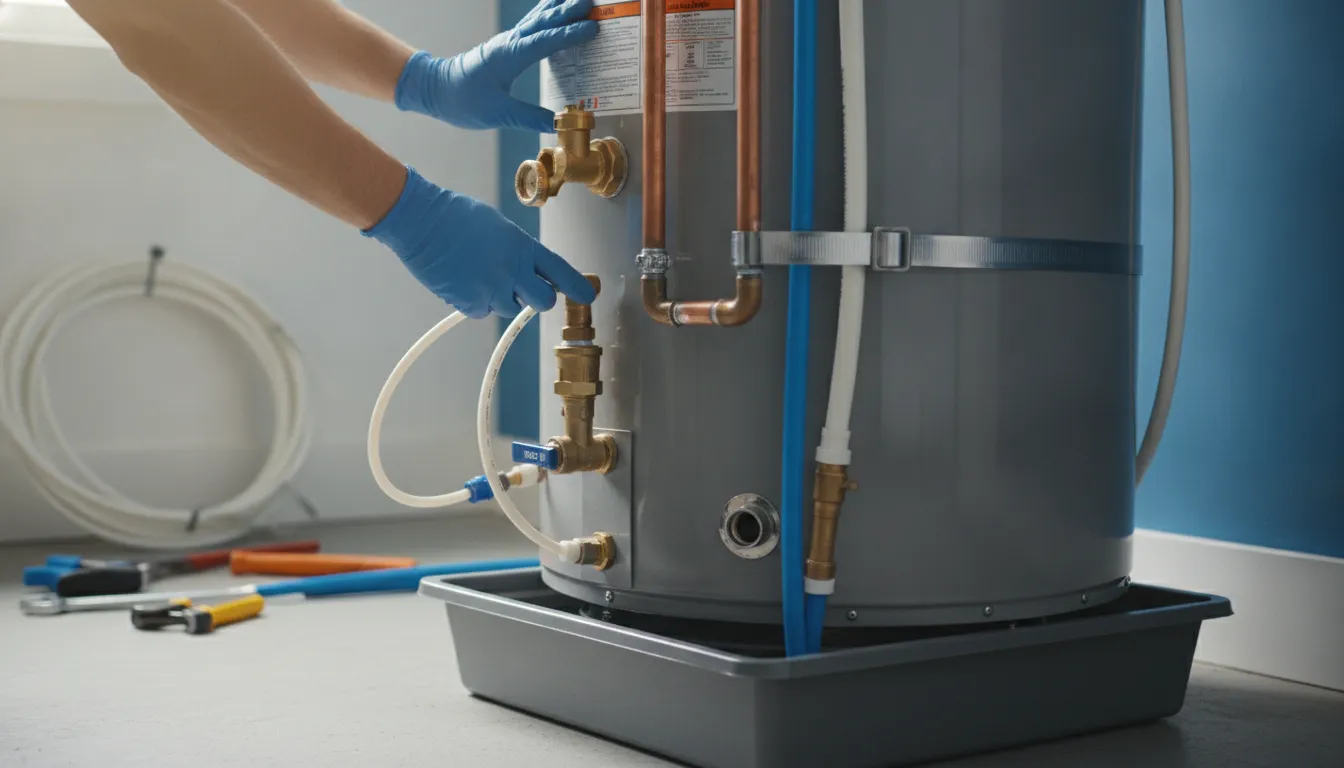
- Plan for seismic strapping, temperature and pressure relief protection, drainage, and required clearances.
- Verify whether an Irvine permit, inspection, HOA approval, or site change affects the project.
- Test temperature, flow, shutoff points, leak protection, and safe operation before the installer leaves.
The result should be reliable hot water without treating safety devices or local requirements as afterthoughts.
How should Irvine homeowners choose a water heater type?
The best water heater type depends on hot-water demand, available space, fuel and utility connections, installation budget, efficiency goals, and how much site modification the home can accommodate. Wish Granted Plumbing can compare the practical fit of storage tank, tankless, and heat-pump systems instead of assuming one technology works for every Irvine home.
Storage tank water heaters
A conventional storage tank keeps a reserve of heated water ready for use. It is often a straightforward replacement when the new unit stays in the existing location and the current fuel, venting, drain, and connections remain suitable. The tradeoff is limited stored capacity and standby energy use. Correct sizing matters because an undersized tank may recover slowly during back-to-back showers, laundry, and dishwashing.
Tankless water heaters
Tankless systems heat water as it is needed and can save floor space while providing a continuous supply when properly sized. They may require a larger gas supply, different venting, electrical changes, or multiple units depending on the home's demand. A professional assessment should confirm flow rate, temperature rise, fixture demand, and the manufacturer's installation requirements before selecting a model.
Heat-pump water heaters
A heat-pump water heater moves heat from the surrounding air into the water rather than creating heat in the same way as a standard electric tank. It can be an efficient option when the installation area has enough space, suitable ambient conditions, condensate management, and the electrical capacity required by the equipment. It also has different operating sounds and recovery characteristics than a conventional tank, so placement and household expectations matter.
| System | Potential fit | Planning questions |
|---|---|---|
| Storage tank | Like-for-like replacement or predictable reserve demand | Is the capacity adequate? Are the existing vent, pan, valves, and straps suitable? |
| Tankless | Space-saving or continuous hot-water goals | Can the gas, venting, electrical supply, and flow capacity support it? |
| Heat pump | Efficiency-focused electric installation | Is there enough air volume, drainage, clearance, and electrical capacity? |
How is water heater sizing determined?
Water heater sizing should be based on the home's peak demand, not simply the number of people or the footprint of the old unit. The installer reviews how many fixtures may run at once, the desired temperature, incoming water conditions, the system's recovery rate, and the equipment's first-hour or flow-rate performance.
- Count simultaneous uses such as showers, baths, laundry, dishwashing, and kitchen fixtures.
- Consider the timing of high-demand routines, especially mornings and evenings.
- Review whether a tankless system can maintain the required flow and temperature rise.
- Check the storage volume and recovery performance of a replacement tank.
- Account for future household changes, remodeling plans, or an added bathroom.
Oversizing can add unnecessary purchase and operating cost, while undersizing leads to cold-water complaints. Wish Granted Plumbing can use the home's actual usage pattern to make the recommendation more useful than a one-size-fits-all replacement.
Which fuel type and connections fit the home?
Fuel type is part of the installation decision because gas, standard electric, and heat-pump equipment place different demands on the home. A safe plan checks the existing service before equipment is ordered, including gas line capacity, venting, combustion air, electrical circuits, water piping, shutoff access, drainage, and the location of the temperature and pressure relief discharge.
Gas water heaters
Gas equipment needs correctly sized supply piping, approved shutoff components, safe venting, and adequate combustion air. Tankless gas equipment can have higher input requirements than a standard tank. The installer should verify the entire path and follow the selected manufacturer's instructions rather than assuming the old connections can be reused.
Electric and heat-pump water heaters
Electric equipment requires a suitable circuit and disconnecting means, with wiring and protection matched to the equipment. Heat-pump units also need adequate clearance and a plan for condensate. These are installation considerations for a qualified professional, not do-it-yourself electrical work.
For broader plumbing installation context, see Wish Granted Plumbing's plumbing installation services. The page is a related service reference, while this article focuses specifically on planning a water heater upgrade in Irvine.
What does a code-conscious installation plan include?
A code-conscious plan starts with the exact installation location and ends with documented testing. Requirements can depend on the equipment, placement, fuel, and whether the project is a like-for-like replacement. Irvine's official guidance says a same-location, like-for-like residential water heater replacement may use its Automated Online Permit system, while a new location follows a different process. It also calls out garage clearances, seismic anchoring or strapping for water heaters over four feet, and HOA approval when applicable.
- Confirm placement: Check garage parking clearance, service access, height, and protection from accidental impact.
- Secure the equipment: Use approved anchoring or strapping and follow state guidance and manufacturer instructions.
- Protect against pressure and leaks: Review the temperature and pressure relief valve, discharge route, drain pan, shutoffs, and expansion control where required.
- Connect utilities safely: Match water, gas, venting, and electrical work to the selected unit and approved installation instructions.
- Handle approvals: Confirm the correct permit route and any HOA process before scheduling the work.
- Test the finished system: Check for leaks, correct temperature, stable ignition or heating, proper drainage, and safe operation.
Homeowners can review the local requirements directly on the City of Irvine water heater replacement guidance. The city page is the better source for current permit and placement details than a generic online checklist.
When should an older water heater be replaced?
Replacement is worth evaluating when an older unit has a leaking tank, repeated breakdowns, rusty hot water, unusual noises, inconsistent temperature, or no longer meets the home's demand. A leak from the tank itself is different from a serviceable valve or connection leak, so the source should be identified before deciding between repair and replacement.
Age is one factor, but it should not be the only one. A professional review can compare the condition of the existing unit, likely repair needs, available replacement types, site modifications, and the cost of continuing to operate an inefficient or unreliable system. This is especially important when switching from a standard tank to tankless or heat-pump technology.
Ask Wish Granted Plumbing about safe water heater options for your Irvine home or call (949) 877-7444.
What happens during a professional installation?
A professional installation should have a clear sequence so the homeowner knows what is being evaluated and what is being changed. Wish Granted Plumbing's process can include the following steps, with the exact work determined by the equipment and the home:
- Review the symptoms and goals: Discuss hot-water demand, existing problems, desired efficiency, and whether the project is a replacement or a system change.
- Inspect the current installation: Check the unit, water and gas connections, venting, electrical service, drainage, clearances, straps, and service access.
- Compare suitable equipment: Evaluate tank, tankless, or heat-pump options against the home's usage and utility setup.
- Confirm the scope: Identify required changes, permit needs, shutoff conditions, disposal, and any access or placement issues before work begins.
- Install and connect: Remove the old equipment as applicable, set the new unit, complete approved connections, and install required safety components.
- Start up and verify: Test the system, inspect for leaks, confirm safe operation, and explain basic care and warning signs.
How can homeowners prepare for installation day?
Good preparation reduces delays and gives the installer room to work safely. Before the appointment, an Irvine homeowner can:
- Clear boxes, stored items, and vehicles from the water heater work area.
- Locate the main water shutoff and the water heater shutoff if they are accessible.
- Gather information about the current unit, including its fuel type, size, age, and recurring problems.
- Tell the installer about low-water-pressure symptoms, temperature complaints, remodeling plans, or added fixtures.
- Ask which permit or HOA steps apply before the replacement date.
- Keep children and pets away from the work area while the system is drained, moved, and tested.
For general plumbing support and related installation needs, homeowners can also review Wish Granted Plumbing's plumbing services. The Wish Granted Plumbing water heater service hub remains the most direct starting point for water-heating options.
How much does water heater installation cost?
There is no responsible single price for water heater installation without reviewing the system type and site. The total can change with tank, tankless, or heat-pump equipment; capacity and efficiency; removal and disposal; venting or gas-line changes; electrical work; drainage; code upgrades; permits; access; and any relocation. Ask for written options that separate the equipment from required site work so the comparison is clear.
Wish Granted Plumbing can help compare the practical scope of an installation rather than recommending a model based only on the lowest upfront price. The goal is a system that fits the home's demand and can be serviced safely over time.
Get a clear water heater installation plan from Wish Granted Plumbing or call (949) 877-7444.
Frequently Asked Questions About Water Heater Installation in Irvine
Do I need a permit for water heater installation in Irvine?
Permit requirements depend on the scope and location. The City of Irvine says a like-for-like residential replacement in the same location may use its Automated Online Permit system, while a new location follows a different process. Confirm the current requirements before work begins, and ask the installer which steps they will handle.
Should I choose a tank, tankless, or heat-pump water heater?
Choose based on household demand, available fuel and electrical service, space, venting, drainage, installation changes, and efficiency goals. A professional comparison is more reliable than choosing from the technology label alone.
How do I know what size water heater my home needs?
Sizing should account for peak simultaneous use, recovery performance, flow rate, temperature rise, and future demand. The right size is not determined by household count alone or by automatically matching the old unit.
What safety components should be checked during installation?
The installation should be reviewed for stable anchoring or strapping, water shutoffs, temperature and pressure relief protection, safe discharge, drainage, leak protection, correct venting or electrical connections, and manufacturer-required clearances. The exact components depend on the unit and installation location.
When is repair better than replacement?
Repair may make sense when the tank is sound and the problem is limited to a serviceable component or connection. Replacement deserves closer consideration when the tank is leaking, failures are recurring, the unit is older, or the system no longer meets household demand.
Can a water heater be moved to a different location?
Possibly, but relocation can change permit requirements, venting, gas or electrical work, drainage, clearances, and access. A professional should evaluate the proposed location before equipment is ordered or the old unit is removed.