


A slow drain is easy to dismiss when water still goes down. For anyone searching for drain cleaning Costa Mesa homeowners can trust, the first step is to understand what the symptom may be telling you. A recurring backup can point to grease, hair, soap residue, mineral buildup, tree roots, or a restriction farther down the branch line. Knowing the early warning signs helps you choose a safe next step before a small drain problem becomes an overflow or sewer issue.
One isolated sink clog may be close to the fixture. Several slow fixtures, foul odors, gurgling, or wastewater coming back through another drain can indicate a deeper problem. This guide explains common causes, safe checks, professional cleaning options, and when a sewer camera inspection may provide a clearer answer.
Schedule professional drain cleaning in Costa Mesa or call Wish Granted Plumbing at (949) 877-7444 for help.
What causes drain problems in Costa Mesa homes?
Drain problems usually begin when material narrows a pipe or when a damaged line prevents water from moving normally. The location, recurrence, and timing of the symptom matter. A kitchen sink that slows after meal preparation suggests a different starting point than a toilet that gurgles whenever the washing machine drains.
- Grease and food residue: Kitchen oils can cool inside a drain and collect food particles over time. A narrow layer may not stop flow immediately, but it can catch more debris with each use.
- Hair and soap residue: Bathroom sinks, showers, and tubs commonly collect hair, shampoo, conditioner, and soap film. These materials can form a flexible mass that traps additional debris.
- Mineral buildup: Deposits can reduce the usable opening inside older pipes. The remaining passage may drain slowly and clog again after a temporary clearing.
- Foreign objects: Wipes, paper products, toys, and other items can create a restriction that household plunging cannot remove. Products labeled flushable can still contribute to line problems.
- Tree roots: Roots may enter a damaged sewer line and catch paper or debris. The resulting blockage often returns after a basic clearing because the opening remains vulnerable.
- Pipe damage or poor flow: A broken, shifted, or bellied section can keep causing blockages even after a surface clog is cleared. Cleaning may restore flow temporarily without correcting the structural issue.
Do not assume every slow drain needs the same treatment. A local sink clog may respond to a careful mechanical clearing, while a recurring whole-house problem can require drain cleaning followed by a sewer camera inspection to identify the condition and location of the restriction.
What warning signs mean a drain needs more than a quick fix?
One slow drain after a visible obstruction is different from a drain that repeatedly backs up. Wish Granted Plumbing recommends professional attention when symptoms return, affect multiple fixtures, or suggest wastewater is not moving through the main line correctly. These patterns help determine whether cleaning alone is enough.
| What you notice | What it may suggest | Useful next step |
|---|---|---|
| One sink drains slowly | Localized buildup near the fixture | Try one safe check. Arrange service if flow stays poor. |
| Several fixtures slow down | Restriction in a shared branch or main drain | Stop adding water. Request a plumbing evaluation. |
| Gurgling or foul odor | Air or wastewater moving around a partial restriction | Schedule professional diagnosis, especially if it returns. |
| Water backs up elsewhere | Problem may be farther downstream | Stop using affected fixtures. Seek prompt help. |
| Clog returns after clearing | Deeper buildup, roots, an object, or pipe damage | Ask whether a sewer camera inspection is appropriate. |
The same drain keeps slowing down
If a sink, tub, or shower improves briefly and then slows again, the blockage may not have been removed completely. A chemical product can open a narrow channel without clearing the material around it. That allows the symptoms to return. Short-lived improvement is useful diagnostic information, not proof that the line is healthy.
Several fixtures drain slowly at the same time
When a kitchen sink, bathroom tub, and nearby toilet all show symptoms, the problem may be farther downstream than any one fixture trap. Multiple affected fixtures are a reason to stop treating each drain as an isolated clog. Have the shared branch or main line evaluated instead.
You hear gurgling after water drains
Gurgling can happen when air is displaced by water moving around a partial obstruction. It is not a diagnosis by itself, but it is useful information for a plumber. Tell the technician whether the sound occurs after a toilet flush, a shower, or a washing machine discharge. The timing can help identify the affected section.
There is a sewage odor or water comes back through another fixture
A sewage smell, dirty water in a tub, or water rising in a floor drain should be treated as an urgent warning. Stop using affected fixtures and avoid contact with contaminated water. If wastewater is backing up, contact a professional before trying a product that could make the line more hazardous to work on.
The problem returns after plunging or snaking
Plunging can move a small obstruction, but repeated failure suggests that the restriction may be deeper, larger, or related to the pipe itself. A professional can select a method based on the fixture, line location, and likely material instead of repeatedly forcing the same tool through the symptom.
The home has an older sewer line or recent excavation nearby
Older plumbing, landscaping changes, and nearby digging can make the condition of a drain line more important to understand. If a blockage keeps returning, a camera inspection can help distinguish buildup from roots, cracks, separated joints, or a collapsed section. That information can prevent repeated short-term cleanings that do not address the cause.
What can a homeowner safely check before calling a plumber?
Before calling Wish Granted Plumbing for drain cleaning in Costa Mesa, you can gather useful information without taking apart a line or pouring a harsh chemical into it. Safe checks help a drain professional diagnose the problem faster and reduce the chance of damage while you wait for service.
- List the affected fixtures. Note whether the issue involves one sink, a bathroom group, several rooms, or every drain in the home. Also note whether the fixtures are on the same floor.
- Watch the timing. Check whether the issue occurs only when a dishwasher, washing machine, or other fixture discharges. A shared timing pattern can point to a branch or main-line restriction.
- Remove visible surface debris. Clean a sink stopper or shower drain cover if it can be lifted safely. Do not reach into standing wastewater or dismantle a contaminated line.
- Try one properly sized plunger. Use enough water to cover the cup and create a seal. Stop if dirty water rises elsewhere, the fixture overflows, or plunging does not improve the situation.
- Record the history. Write down when the drain was last cleared and how long the improvement lasted. A pattern of relief followed by another backup is important to the technician.
- Look for visible leaks only. Check under a sink, around a toilet base, or near a cleanout without opening a pressurized or contaminated line. Do not excavate or remove a cleanout cap if wastewater may be behind it.
Avoid mixing drain chemicals. Never combine products, and do not use a chemical cleaner immediately before professional service without telling the technician. Residual chemicals can cause burns and create a hazard during inspection or clearing. If you already used a product, keep the container or record the product name so the technician can work more safely.
How does professional drain cleaning in Costa Mesa work?
Professional drain cleaning starts with a diagnosis rather than a one-size-fits-all tool. The technician can ask which fixtures are affected, review the history of previous backups, and assess whether the restriction appears local or farther down the line. The cleaning method should match the fixture, access point, pipe condition, and material causing the blockage.
Mechanical clearing for a localized restriction
A cable or other mechanical tool may be appropriate when the blockage is close to a fixture or branch line. The goal is to open the passage and remove or break up the obstruction without damaging the pipe. If the same drain quickly slows again, repeated mechanical clearing may not be the best long-term answer.
Hydro jetting for certain heavy buildup
For stubborn grease, mineral deposits, or root-related buildup, hydro jetting may be considered when the pipe condition and access make it appropriate. High-pressure water is not the right answer for every line. The pipe should be assessed before that method is selected, especially when there are signs of cracks, weakened material, or a collapsed section.
Cleaning followed by verification
When a problem has a history of returning, clearing the immediate obstruction may be only one part of the service. A professional may recommend confirming that flow has improved and discussing a sewer camera inspection. Verification is especially useful when multiple fixtures were affected or when the home has experienced more than one backup.
The purpose of a professional visit is not simply to make water disappear for a few minutes. It is to identify the likely cause, choose a reasonable method, and explain what the observed pattern means. If the line appears damaged, cleaning alone may not prevent another problem.
Why might a sewer camera inspection be needed after drain cleaning?
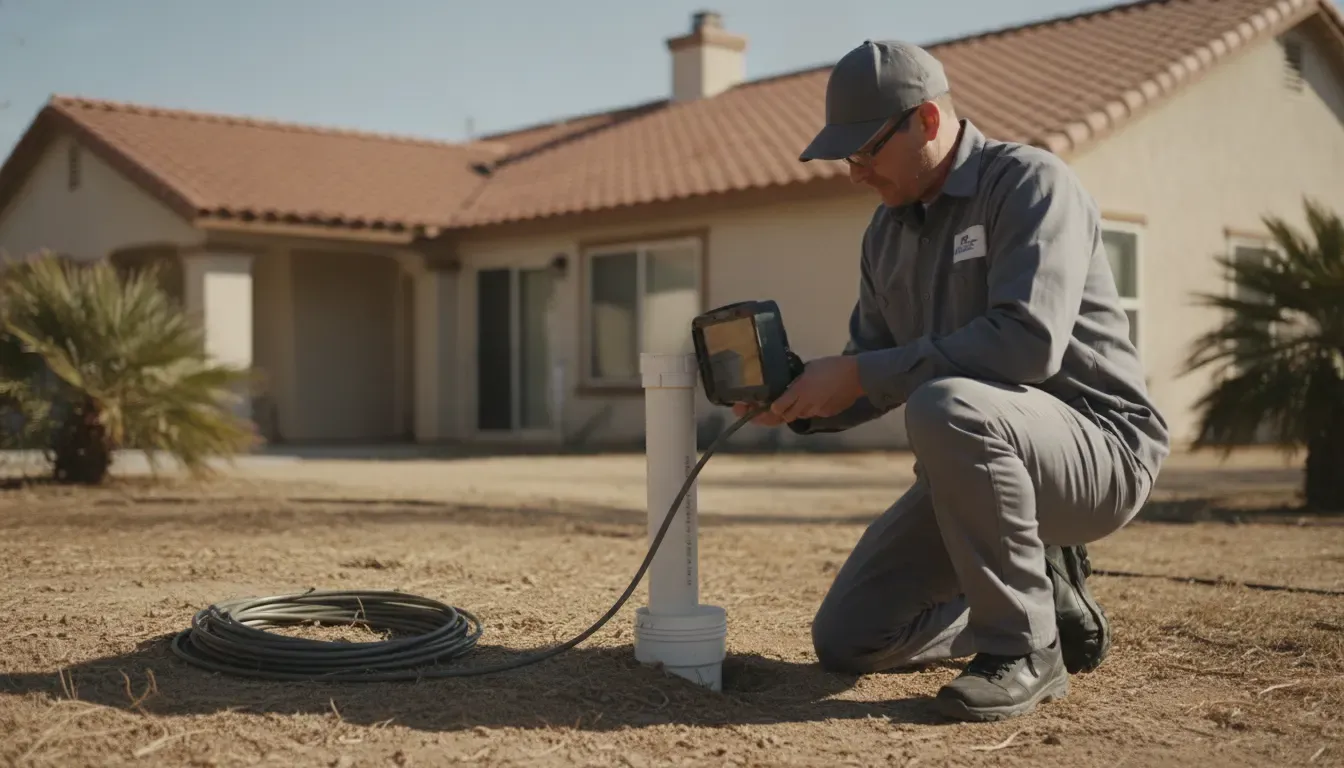
For Costa Mesa homeowners, a sewer camera inspection shows what drain clearing alone cannot. A small camera can help locate roots, cracks, separated joints, heavy deposits, or a damaged section likely to cause another backup. Wish Granted Plumbing may recommend this step when symptoms return soon after service or several fixtures are involved.
Inspection footage can help separate a maintenance issue from a repair issue. If the line is open and structurally sound, the next recommendation may focus on cleaning and prevention. If the footage shows damage, a plumber can explain the affected section and discuss repair options without asking you to guess from surface symptoms.
A camera can also help avoid unnecessary assumptions. A bad odor does not automatically prove a broken sewer line, just as a temporary improvement does not prove that the line is clear. The inspection should be interpreted alongside the fixture pattern, line history, and visible conditions.
Wish Granted Plumbing offers drain and sewer service for homeowners and businesses in Costa Mesa and nearby Orange County communities. You can review the broader drain and sewer services available through the company before requesting an evaluation.
What affects the right drain service recommendation?
The right recommendation depends on more than how slowly water drains. A plumber may consider whether the issue is isolated or widespread. Whether the line has a history of roots, whether the pipe is accessible, and whether previous cleanings provided lasting relief. Sharing these details helps the technician avoid treating a deeper problem as a simple fixture clog.
- Location: A bathroom sink trap, a shared branch, and a main sewer line require different access and diagnostic decisions.
- Frequency: A first-time event may have a different cause than a backup that returns every few weeks.
- Pipe condition: Older or damaged piping may need inspection before a more forceful cleaning method is used.
- Water behavior: Gurgling, bubbling, odors, and cross-fixture backups provide clues about flow and air movement.
- Previous work: The date, method, and result of earlier drain service can show whether the obstruction was removed or only bypassed.
There is no safe way to diagnose every underground condition from a fixture opening. When the pattern suggests a shared line or structural issue, professional evaluation can provide a clearer path than trying several products or tools at random.
How can you reduce the chance of another drain backup?
Prevention starts with keeping problem materials out of the line and responding to early changes in flow. These habits cannot correct damaged piping, but they can reduce avoidable buildup and give you a clearer baseline before a recurring drain problem becomes an emergency.
- Collect cooking grease in a container instead of pouring it into the sink.
- Use a hair catcher in showers and clean it regularly.
- Flush only toilet paper and human waste, not wipes or other products labeled flushable.
- Do not use a garbage disposal as a substitute for a drain filter or compost container.
- Pay attention to repeated slow drainage rather than waiting for a complete backup.
- Keep records of recurring symptoms and the dates of prior service.
- Ask a plumber whether periodic maintenance or a camera inspection makes sense after a recurring problem.
Good habits help, but they are not a substitute for diagnosis when the same symptom keeps returning. A drain that repeatedly slows down is giving you information. Acting on that information early may reduce the chance of an overflow and help clarify whether cleaning, inspection, or repair is the appropriate next step.
Contact Wish Granted Plumbing to arrange a Costa Mesa drain evaluation or call (949) 877-7444 for professional guidance.
Frequently asked questions about drain cleaning in Costa Mesa
How do I know if a drain is clogged or if there is a sewer line problem?
A single slow fixture may have a local clog, while several fixtures, gurgling, sewage odors, or water backing up in another drain can point farther downstream. A plumber can evaluate the pattern and use a camera inspection when the cause is not clear.
Should I use a chemical drain cleaner before professional service?
It is safer to avoid mixing or repeatedly using chemical cleaners. Tell the plumber if any product was used, because residue can create a safety hazard during drain work and may not solve the underlying restriction.
Is hydro jetting appropriate for every Costa Mesa drain?
No. Hydro jetting can be useful for certain buildup and root-related restrictions, but the pipe condition, access, and type of blockage should be considered first. A professional can recommend the method that fits the line.
When should I request a sewer camera inspection?
Consider an inspection when a backup keeps returning, multiple fixtures are affected, a line has a history of roots, or cleaning provides only short-term relief. The camera can show whether the problem is buildup or structural damage.
What should I do if wastewater is backing up into my home?
Stop using affected fixtures, keep people and pets away from contaminated water, and contact a plumbing professional. Do not keep plunging if water is rising through another fixture, because that can spread the backup.