


If you smell rotten eggs, hear a hiss near a gas line, or feel dizzy indoors, leave first. A gas leak plumber is the right call only after 911 or the gas utility says the building is safe. Until then, do not hunt for the source, flip switches, or stay inside to open windows. This guide is for Orange County homeowners who need the safe order of steps, then a clear plumbing follow-up.
Smell gas or hear a hiss? Leave and call 911 first. After clearance, contact Wish Granted Plumbing at (949) 877-7444.
Wish Granted Plumbing serves Huntington Beach and nearby Orange County communities from 17011 Beach Blvd. Technicians are licensed, insured, and background-checked. They do not replace the fire department or the gas utility during an active suspected leak. They help after clearance, when accessible piping, fittings, or appliance connections need a licensed look.
What Should You Do Before a Gas Leak Plumber Arrives?
Leave the building, call from outside, and wait. A gas leak plumber should not be your first call while you are still indoors. The Pipeline and Hazardous Materials Safety Administration tells people who suspect a leak to get away on foot, call 911 from a safe place, and avoid flames, sparks, and phones near the leak.
- Get people and pets outside. Do not stop for bags, phones, or a last look at the stove.
- Do not create a spark. Leave lights, thermostats, garage openers, and appliances as they are.
- Call from a safe distance. Use 911 and the gas utility once you are well away from the building.
- Keep others back. Do not let neighbors, kids, or pets return or gather near an outdoor meter.
- Wait for official clearance. A fading smell is not a green light to walk back in.
- Book plumbing follow-up after clearance. That is when a licensed gas leak plumber can inspect accessible piping.
Massachusetts public guidance is even more direct about indoor odors: leave immediately, call 911 from outside, and do not touch lights, appliances, or windows, or try to shut the gas off yourself. The Massachusetts guidance on smelling gas matches the same rule used here. Emergency responders control the scene. Plumbing work comes later.
Why the first minutes matter
Natural gas can collect in a room, a crawl space, or near an appliance before anyone sees a broken pipe. Staying to "just check" keeps people in that space. It can also add an ignition source if a switch, phone, or motor sparks. Distance is the safer test. Identification can wait.
Who to call, and in what order
Call 911 if you are indoors, if anyone feels ill, or if you are not sure the area is safe. Also notify the gas utility from outside. Southern California Gas publishes a public safety page for customers in this region. Use the number on your bill or the utility's emergency line, not a general office queue. A plumbing company can schedule the next visit only after responders say it is safe to return.
What Are the Warning Signs of a Gas Leak?
A sulfur or rotten-egg smell is the sign most people know. It is not the only one, and it is not a complete test. Distribution gas is odorized so a leak is easier to notice. Odor can be weak, uneven, or missed. Treat a cluster of signs as a reason to leave, not as a puzzle to solve inside.
| Possible sign | What to do |
|---|---|
| Rotten-egg or sulfur smell | Leave at once. Call 911 or the gas utility from outside. |
| Hissing or roaring near a pipe or appliance | Do not move closer. Get people out and keep them away. |
| Dead or yellow plants near outdoor piping | Stay back. Report it from a safe spot. Do not dig. |
| Bubbles in wet soil or standing water | Treat it as a possible release. Do not probe the ground. |
| Headache, dizziness, or nausea indoors | Move to fresh air and get emergency help. |
Smell is a clue, not proof
Utilities add an odorant, often described as a skunk or rotten-egg smell, so a leak is easier to notice. PHMSA notes that some gas lines can still be hard to smell, and that transmission gas may have little odor at all. A faint smell does not mean a small problem. A missing smell does not mean the house is clear. If another sign is present, leave.
Sound and outdoor clues
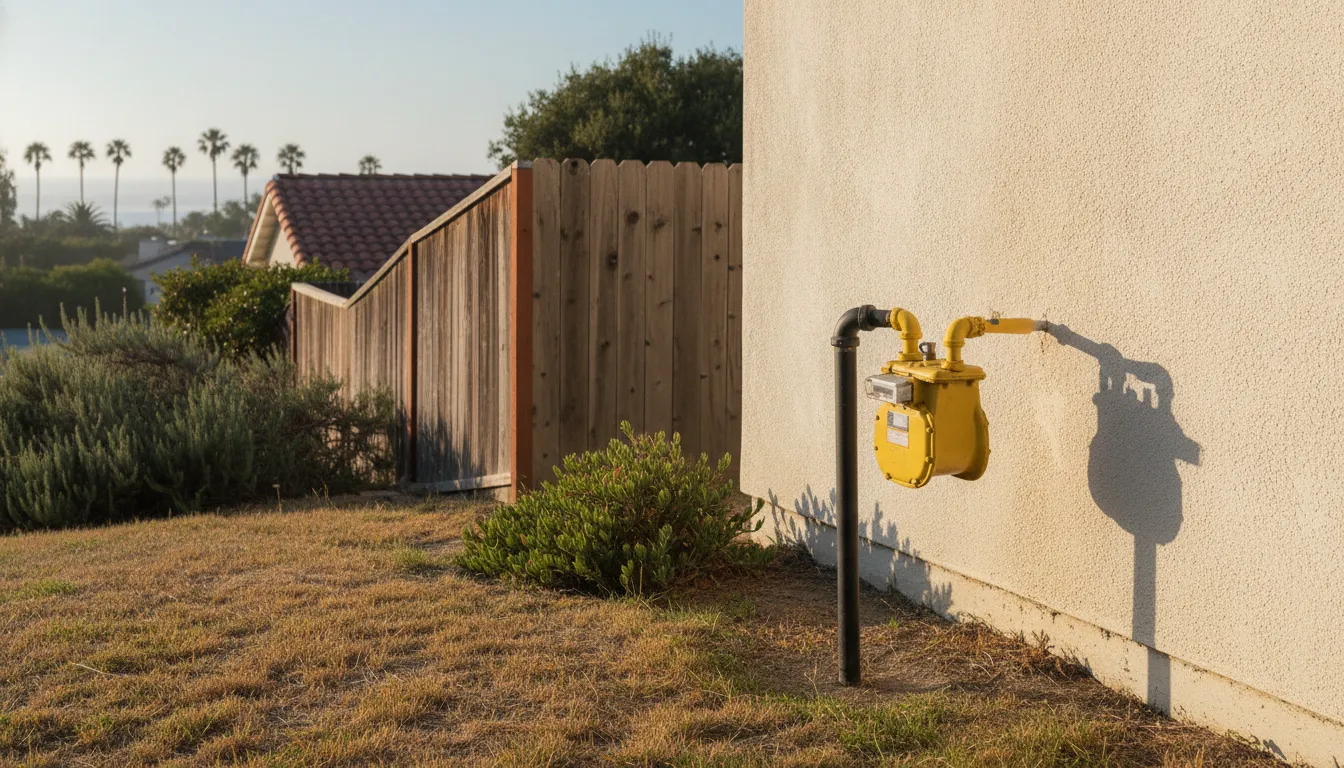
A hiss or roar near a meter, connector, or exposed pipe can mean gas is escaping. Volume is not a reliable size gauge. Outdoor clues include dead grass, dry soil in a green yard, blowing dirt, or steady bubbles in a wet spot. PHMSA lists those sight clues for pipeline releases. Landscaping problems have many causes, so plants alone do not prove a leak. They do mean you should not dig, stake, or use a flame to check.
Symptoms versus carbon monoxide
Headache, dizziness, nausea, and fatigue have many causes. They can also mean you should get to fresh air now. Carbon monoxide is a different hazard. It has no odor, and a faulty fuel-burning appliance can produce it. A gas smell and a carbon monoxide alarm are both reasons to leave.
Neither symptom nor alarm is a reason to stay and troubleshoot. The California Public Utilities Commission points the public to utility and 911 response for gas incidents, not to a DIY check.
What Should You Avoid Before Help Arrives?
Most extra risk comes from staying inside to be helpful. People try to shut a valve, open a window, unplug a stove, or call a relative from the kitchen. Those steps can add exposure or a spark. Get out, then call.
Do not hunt for the leak
Do not use a match, lighter, candle, or lighter tool to find gas. Do not spray a homemade mix on a fitting or take a connector apart. A simple test can ignite gas or damage a part that a licensed tech still needs to see. Leave piping, appliance connectors, and shutoff hardware alone.
Do not use switches, phones, or vehicles nearby
Do not flip lights, adjust a thermostat, open a garage door, or start an appliance while you are still in the suspected area. Do not use a phone inside that space. Do not start a car near the building or drive through a vapor area. Move away first, then call.
Do not go back because the smell fades
Odor can thin out without proving the piping is sound. Do not return for a phone, a pet carrier you already passed, or to "just crack a window." Wait until 911 responders or the utility say the area is safe. A gas leak plumber cannot make that clearance call from a service van while gas may still be present.
Do not repair gas piping yourself
Gas piping is not a weekend project. Do not tighten a fitting, reconnect a range, or turn a valve to "test" whether the smell returns. After clearance, hire a licensed plumber whose scope includes the gas work your utility or inspector named. Wish Granted's gas line repair page covers repair of leaking or damaged lines. It is not a substitute for the emergency call.
How Does a Gas Leak Plumber Check a Cleared Home?
After responders clear the property, a gas leak plumber looks at the plumbing side of the event. The visit starts with access and history. Which room was involved? Is the gas still off? What did the utility tag or write down? That context decides what can be checked the same day.
The goal is not to promise a single bad joint before anyone is on site. A careful visit looks at accessible piping, shutoff points, threaded fittings, flexible connectors, and appliance connections. Hidden runs may need more access. The plumber should say what the visit can confirm and what it cannot.
What the visit can include
A licensed plumber uses instruments and visual checks, not a guess based on smell. The visit may cover exposed pipe, connectors at a range, dryer, furnace, or water heater, and the area the utility flagged. If a line is buried, capped, or behind a finished wall, the tech should explain the limit instead of forcing a result. Wish Granted Plumbing does not claim a remote diagnosis. The condition on site sets the next step.
How this differs from leak detection for water
Water leak detection and gas response are different jobs. Acoustic listening and thermal imaging can help find hidden water leaks. They are not a reason to stay inside an uncleared gas odor, and they are not a promise of how every gas visit is done. For hidden water loss, see the leak detection service page. For an active gas smell, the emergency order above still comes first.
Repair scope after the check
Once the condition is known, you should get a plain description of the repair, the access it needs, and any permit or inspection step that applies. A localized connector is not the same job as a longer damaged run. New appliance lines and extensions are installation work, covered on the gas line installation page. Broader fixture and pipe repairs sit on the plumbing repairs page.
How Should You Choose a Gas Leak Plumber in Orange County?
Choose after the emergency is over, and choose on license, scope, and how clearly the company explains the visit. A fast quote that skips clearance is not a bargain. Ask what the post-clearance check includes, what access they need, and how they will describe the repair before work starts.
Questions worth asking
Ask whether the technician is licensed for the gas piping work, whether the company is insured, and whether the visit is for evaluation, repair, or both. Ask what happens if the utility left the gas off. Ask how they handle a connector versus a longer line. The local plumber checklist is a useful list of hiring questions. Use it for licensing, insurance, and communication. Do not use it to pick someone who offers to diagnose an active leak by phone.
What Wish Granted Plumbing will and will not do
Wish Granted Plumbing is a family-owned plumbing company in Huntington Beach. It provides gas line repair and gas line installation for homes and businesses in the area, along with other plumbing work listed on the plumbing services page. It does not ask you to skip 911. It does not publish a price for an unseen gas repair, and it does not promise same-hour clearance of an active leak. Call (949) 877-7444 after the property is safe to re-enter.
City repair pages versus this guide
Huntington Beach, Newport Beach, Long Beach, and Los Alamitos already have live gas line repair articles. Those pages cover local repair signs and service options for each city. This article stays on the emergency sequence and the post-clearance plumbing visit. If you need a city repair overview, start with the Huntington Beach gas line repair guide. If the smell is happening now, leave and call 911 before you read either page.
How Can You Lower Gas-Line Risk After Clearance?
After the utility or fire department clears the home, prevention is follow-up and records, not a home test. Ask for notes on what was checked, what was repaired or left for a permit, and whether an inspection is still due. Property managers should file the utility tag with the unit record.
Let a licensed tech restore service
If a connector, exposed line, or appliance hookup was part of the event, do not reconnect it to test the smell. Leave restoration to the utility and a licensed plumber. A new run for a remodel or added appliance is permitted installation work. It is not a temporary hose or a tightened fitting.
Keep alarms in service
Follow the alarm maker's guide for placement, testing, and replacement. A carbon monoxide alarm does not detect every gas leak. A combustible-gas alarm does not replace a carbon monoxide alarm. If either sounds, leave and call for help. Do not pull the battery and stay to investigate.
Watch outdoor piping from a distance
If you later see bubbles, fresh dead grass, or disturbed soil near a meter or outdoor line, keep people and pets away. Do not dig to confirm it. Call 911 or the gas utility from a safe place if you suspect an active release. A plumber can schedule piping follow-up after that call is handled. For other urgent plumbing that is not a gas smell, the emergency plumber guide covers water and sewer emergencies separately.
Keep a simple record
Write down the date, what you noticed, who cleared the property, and what the plumber repaired. Save photos of tags, not of you standing next to an active odor. Those notes help the next tech, an inspector, or a property manager. They also keep the story straight if a connector needs a second visit.
After 911 or the utility clears your home, schedule a gas line check with Wish Granted Plumbing at (949) 877-7444.
Frequently Asked Questions
Do plumbers handle gas leaks?
Licensed plumbers can evaluate and repair gas piping after the emergency is controlled. If you smell gas or feel ill, leave and call 911 or the gas utility from outside. Do not book a plumber instead of that call, and do not wait indoors for a service window.
Who should I call if I smell gas outside?
Move away from the meter or the damaged plants and call 911 or the gas utility. Keep people and pets back. Do not dig, use a flame, or start equipment nearby. A gas leak plumber can handle piping follow-up after responders clear the area.
Can a gas leak have no smell?
Yes. Odorant can be faint, and some people do not notice it. A missing smell does not prove the line is safe. Hissing, bubbles, dead vegetation, or symptoms are still reasons to leave and call from a safe place.
What is a gas plumber called?
People say gas plumber, gas line plumber, or gas leak plumber. The label matters less than the license and the scope. During an active smell, emergency responders and the gas utility are still the first call.
Can I test a gas fitting myself?
No. Do not use a flame, open a fitting, or run a homemade test. If the area is not cleared, leave and call 911. If it is cleared and a connector or line needs work, hire a licensed plumber.